I. Para empezar
A. Resumen de la sesión
B. Ejercicios de repaso
C. Vocabulario clave
D. Lectura
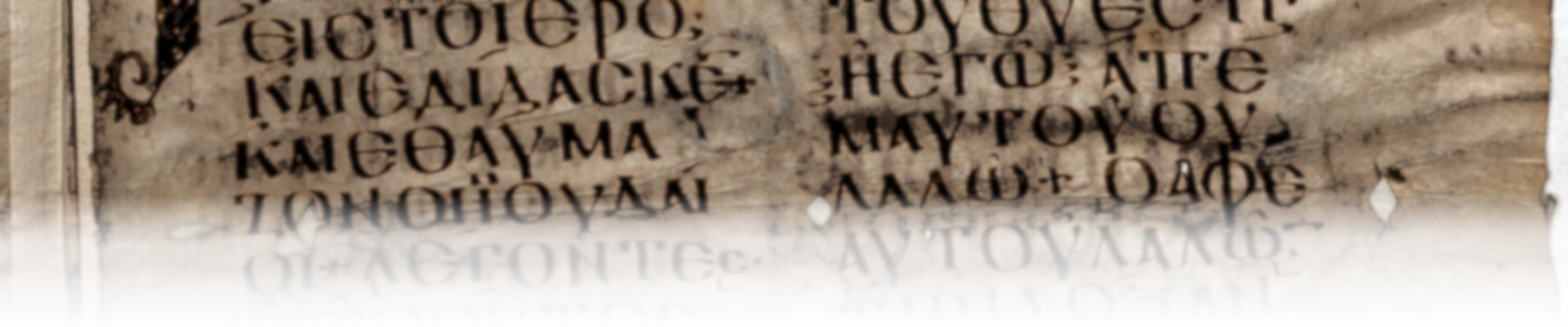
Usemos el texto griego para leer Jn 8:52–59.
Clave de lectura
E. Memorizando el texto griego
II. CONTENIDO
III. Práctica de exégesis:
Investigación previa (Logos AI, 2026-08-24)
Verificar antes de usar
Respuesta de Logos AI Study Assistant (2026-08-24), con citas autor/obra/página — contrastar contra el impreso antes de usar en clase (ver historial 2026-07-03/04 en Griego/CLAUDE.md sobre citas fabricadas).
The tension between “children of Abraham” and “children of the devil” emerges from a fundamental spiritual reorientation. The discussion shifts from descent from Abraham to descent from God[1], and when the opponents claim God as their Father, Jesus responds that they belong to the devil, who stands behind the plot to kill him and incites their opposition to his messianic mission[1]. Jesus maintains that ethnic descent from Abraham cannot save them; only faith in the Son can set them free[1]. The paternity claim becomes cosmic: the deadly combat between Jesus and the Pharisees is presented as a clash between good and evil, between God and Satan, proceeding under God’s sovereignty while rendering those opposing the Messiah morally culpable[1].
Regarding the ἐγὼ εἰμί claim in 8:58, all three scholars identify it as an unmistakable deity claim. Robertson notes that Jesus claims eternal existence with the absolute phrase used of God, with a complete contrast between Abraham’s entrance into existence and Jesus’ timeless being[2]. Carson observes that had Jesus merely claimed to exist before Abraham, he could have said “Before Abraham was, I was,” but instead brings forward the ἐγὼ εἰμί formula, saying “Before Abraham was born, I am”[3]. The expression carries strong linguistic and conceptual connections with Isaiah 40–55, where God declares “I, the LORD…I am he” and “from ancient days I am he”[3]. The Jews’ response of taking up stones presupposes they understand these words as a blasphemous claim to deity[3]. Köstenberger frames this as Jesus affirming not only that Abraham anticipated his coming but that Jesus preceded Abraham, implicitly claiming preexistence, which provokes the stoning attempt for blasphemy[1].
Sources cited: D. A. Carson, The Gospel according to John, PNTC (1991); Andreas J. Köstenberger, A Theology of John’s Gospel and Letters (2009); A. T. Robertson, Word Pictures in the New Testament (1933). The search was constrained to these three authors. Would you like me to search your entire library instead?
[1] Andreas J. Köstenberger, A Theology of John’s Gospel and Letters: The Word, the Christ, the Son of God, Biblical Theology of the New Testament (Grand Rapids, MI: Zondervan, 2009), 221–222. [2] A.T. Robertson, Word Pictures in the New Testament (Nashville, TN: Broadman Press, 1933). [3] D. A. Carson, The Gospel according to John, The Pillar New Testament Commentary (Leicester, England; Grand Rapids, MI: Inter-Varsity Press; W.B. Eerdmans, 1991), 358.
Comentemos
IV. Cierre
Repaso del vocabulario
Ejercicio